What To Do When Earwax Becomes a Problem
Otherwise, you can safely remove wax from your ears if it’s causing you problems. Here’s how.
1. Use a washcloth
After washing your face or stepping out of a steamy shower, cover one finger with a damp washcloth and gently wipe out the nooks and crannies of your outer ear. “De-clogging the most external exit will help with that natural [earwax] migration,” Ying says.
2. Try an earwax softening agent
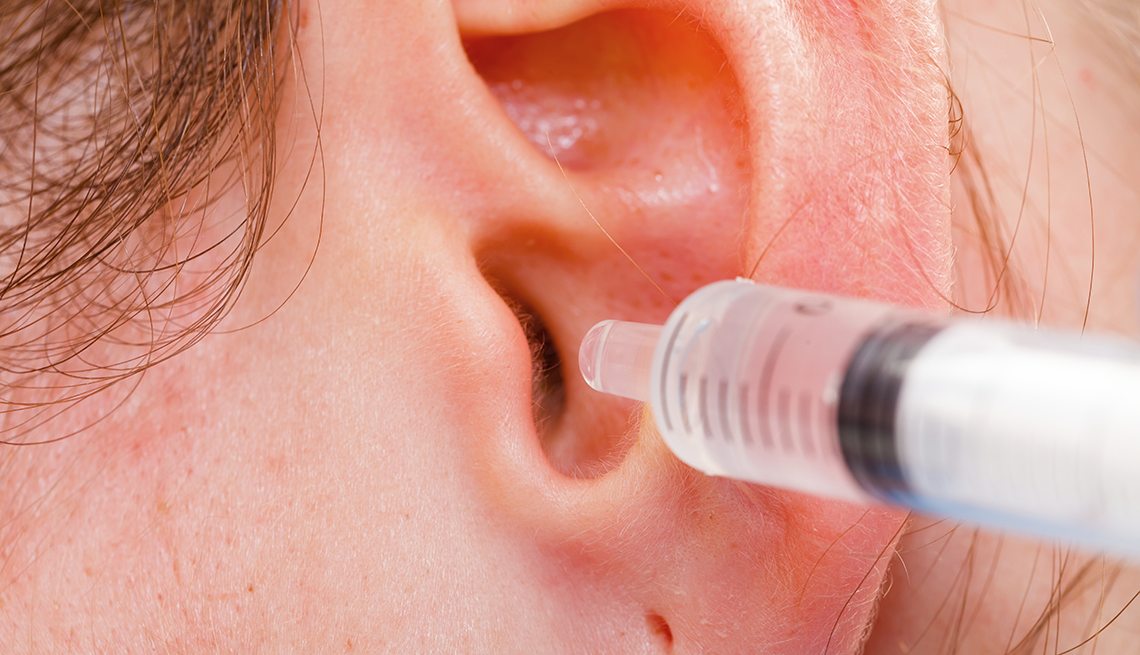
People who produce a lot of earwax can try using a softening agent — such as mineral oil or 3 percent hydrogen peroxide — to help remove it. Use an eyedropper to apply one or two drops into your ear, and let the fluid flow to the waxy buildup. Then tilt your head so the fluid drains out. Sometimes, gently squeezing a rubber-bulb syringe (you can buy one at your local pharmacy) containing warm water into your ear helps dislodge the loosened wax. You can keep irrigating your ear with water until the wax comes out.
But this irrigation isn’t always appropriate, especially if you have a damaged eardrum or a middle ear infection. A hole in the eardrum could allow fluid to get flushed deeper into your ear canal, and if it doesn’t come out, it could cause an outer ear infection. And if you’re not careful, irrigation can perforate the eardrum. What’s more, if you’re softening the plugged-up wax but not dissolving or removing it, the fluid can turn the earwax into a muddy wall that can plug up your ears even more.
3. Use eardrops
If mineral oil and hydrogen peroxide don’t work, try some over-the-counter eardrops to loosen the earwax. (Ying recommends the Debrox Earwax Removal Kit.) Some products include a bulb syringe that you squeeze to flush your ear with warm water, if needed. Just keep the safety concerns in mind about irrigating your ear.
4. Don’t use cotton swabs
It might be tempting to clean out the earwax with a cotton swab, but don’t. You’ll risk serious injury to your eardrum, and you won’t get much earwax, either.
“You might look at your Q-tip and think, Look at this stuff I got out of my ear,” says Vaughan, who regularly sees this in his practice. “But that’s actually wax you got from the sides of the ear canal, after you’ve pushed most of the wax further inside the ear canal.”
When you put a cotton swab inside your ear and hear the tip rustling those tiny hairs, that means you’ve pushed that swab into a place in your ear it shouldn’t be.
When to get medical help for impacted earwax
If you can’t unclog your ears on your own, see your primary physician or an ear, nose and throat doctor to remove the blockage. They have tools and techniques to safely remove impacted wax. “We have the endoscope to let us look inside the ear canal to see exactly how much wax you have and the texture of the wax,” Namdar says “and then we decide the best instrument to use to remove it.”
Do’s and Don’ts of At-Home Earwax Removal
DO
- Use a damp washcloth to wipe the outer portion of the ear each day
- Try a drop or two of a softening agent, like baby oil or mineral oil, to remove wax
- Consider an over-the-counter product containing oil or hydrogen peroxide to loosen wax
DON’T
- Insert cotton swabs, fingers or anything else into your ear canal
- Irrigate your ears with water if you have a damaged eardrum or middle ear infection
link