New evidence shows that timely introduction of peanuts and eggs reduces allergy risks

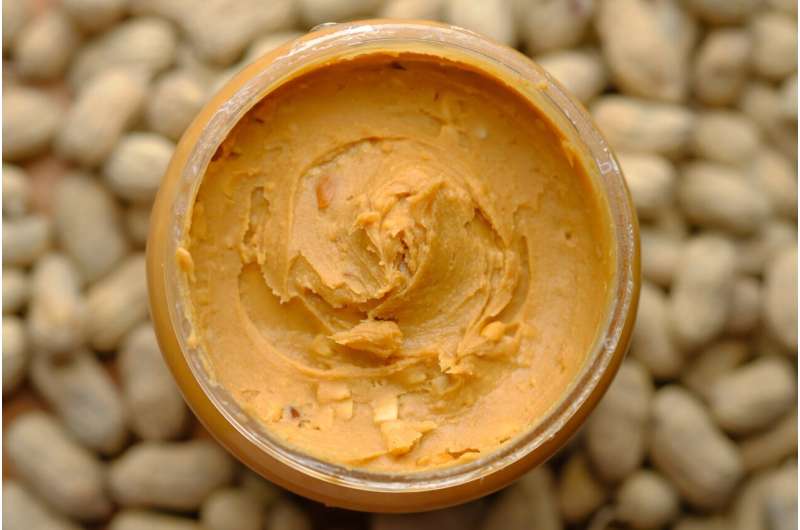
Families who introduce peanut butter and eggs to their baby’s diet at about six months of age can significantly reduce the chances of them developing a life-threatening allergy, according to a study published in the Journal of Allergy and Clinical Immunology: In Practice.
The findings from researchers at The Kids Research Institute Australia confirm the robust quality of the updated Australasian Society of Clinical Immunology and Allergy (ASCIA) Infant Feeding and Allergy Prevention Guidelines, providing confidence to parents about to embark on the feeding journey—even if they have a family history of allergies.
Prior to 2016, the advice to parents was very different, with common food allergens generally introduced when babies were closer to 12 months of age or older.
“Australia’s guidelines were changed in 2016 to encourage the timely introduction of these common food allergens, based on a range of randomized controlled trials from around the world, including those conducted by my team and I on timely egg introduction in infant diets,” said Associate Professor Debra J. Palmer, one of the authors.
“However, some parents are still confused about when to introduce allergens—especially those families with a history of allergies.”
Co-author Summer Walker said the study compared two groups of babies: group one (506 babies born 2006–2014), who received no infant feeding advice, and where eggs and peanut butter were introduced after 10 months; and group two (566 babies born 2016–2022, recruited from a longitudinal birth cohort study within The Kids), where all families were provided with hard copies of the updated infant feeding and allergy prevention guidelines when the babies were six months of age.
All babies had a first-degree relative with a history of allergic disease, and all were assessed for food allergies at age 1.
“For the babies in group two—whose caregivers followed the updated guidelines and introduced peanut butter and eggs at about six months of age—egg allergy was reduced from 12% to 3%, and peanut allergy reduced from around 6% to 1%,” Walker said.
“The research backs up the ASCIA guidelines and gives confidence to parents and health professionals about how to approach introducing these foods.”
Walker said the study results highlighted the benefits of directly providing parents and caregivers with hard copies of the updated guidelines, and showed they should be widely distributed in the community via health care professionals, including child health nurses and GPs.
“By increasing the distribution of guidelines and encouraging health professionals to share the information, we can considerably reduce the incidence of food allergies in the community,” she said.
More information:
Summer V.M. Walker et al, Infant diet recommendations reduce IgE-mediated egg, peanut and cow’s milk allergies, The Journal of Allergy and Clinical Immunology: In Practice (2025). DOI: 10.1016/j.jaip.2025.06.012
www.jaci-inpractice.org/articl … (25)00592-6/fulltext
Provided by
The Kids Research Institute Australia
Citation:
New evidence shows that timely introduction of peanuts and eggs reduces allergy risks (2025, July 3)
retrieved 4 July 2025
from
This document is subject to copyright. Apart from any fair dealing for the purpose of private study or research, no
part may be reproduced without the written permission. The content is provided for information purposes only.
link