In a world-first, Chinese surgeons save patient’s ear with graft onto foot
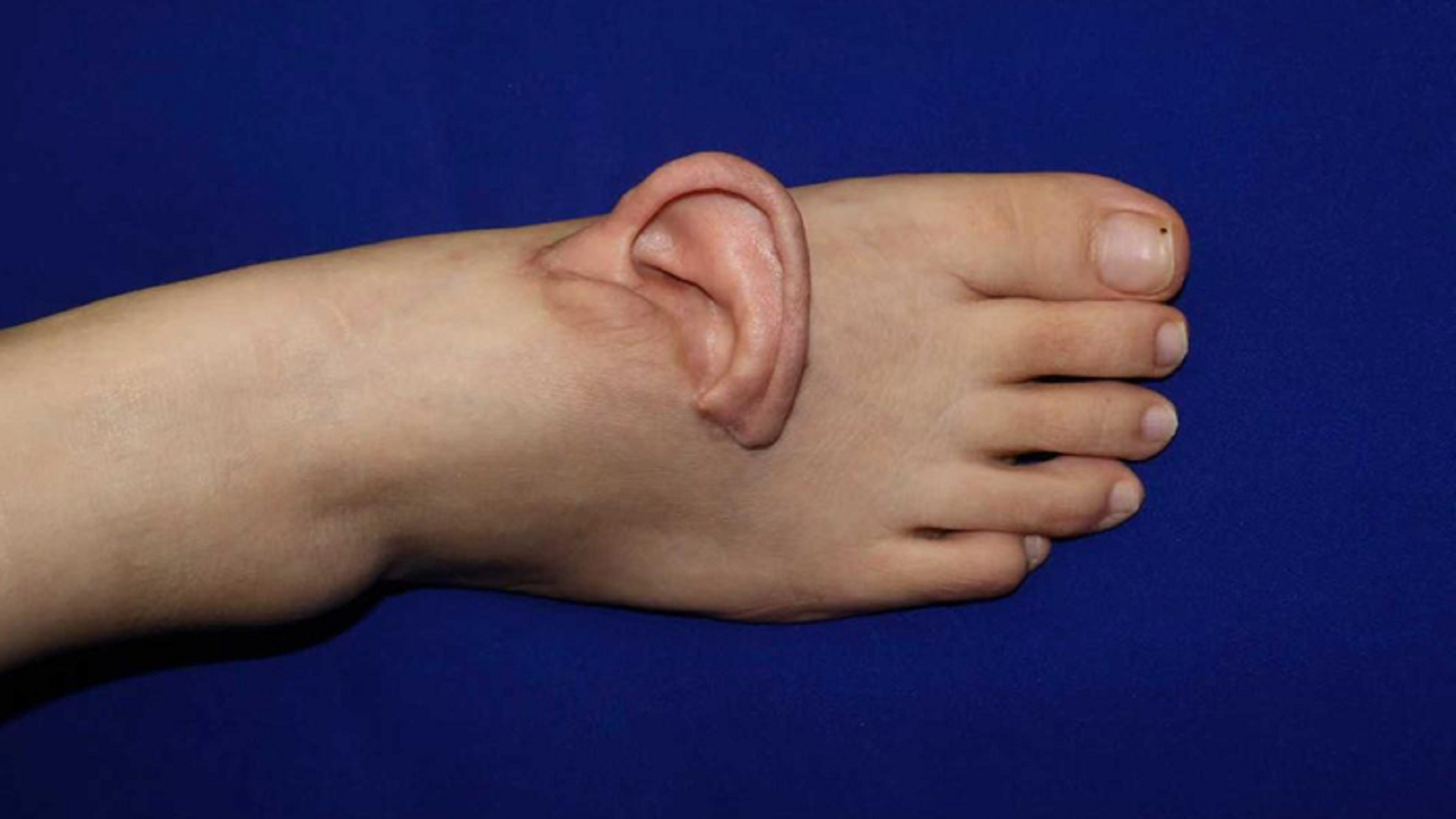
Chinese surgeons have carried out a one-of-a kind reconstructive procedure by temporarily grafting a woman’s severed ear onto her foot and ‘letting it survive’ for months before reattaching it to her head.
The unprecedented procedure was conducted by a microsurgery team at Jinan’s Shandong Provincial Hospital, after the patient, identified only as Sun, suffered a devastating factory accident in which her hair got trapped in machinery during her shift.
According to the hospital, the heavy equipment tore away large portions of skin from her scalp and neck, completely severing her ear along with the surrounding tissue.
The woman was rushed to hospital with life-threatening injuries, where a medical team, led by Qiu Shenqiang, a deputy director of the hospital’s microsurgery unit, determined that conventional reattachment was impossible due to the severity of the injuries.
A radical approach
South China Morning Post (SCMP) reported that the surgeons initially attempted standard scalp reconstruction, but extensive vascular damage meant that blood flow could not be restored reliably enough to immediately reattach the ear.
Qiu revealed that the woman’s scalp, neck and facial skin was “split into multiple fragments,” while her ear was “completely severed along with the scalp.” With no prior example to follow, the medical team decided on an unconventional solution and grafted the ear onto the top of her foot.
The procedure, called heterotopic grafting, is an intervention where donor tissue or an organ is transplanted into a site different from its original anatomical spot. While commonly used in microsurgery, it is rarely applied to ear reattachment.
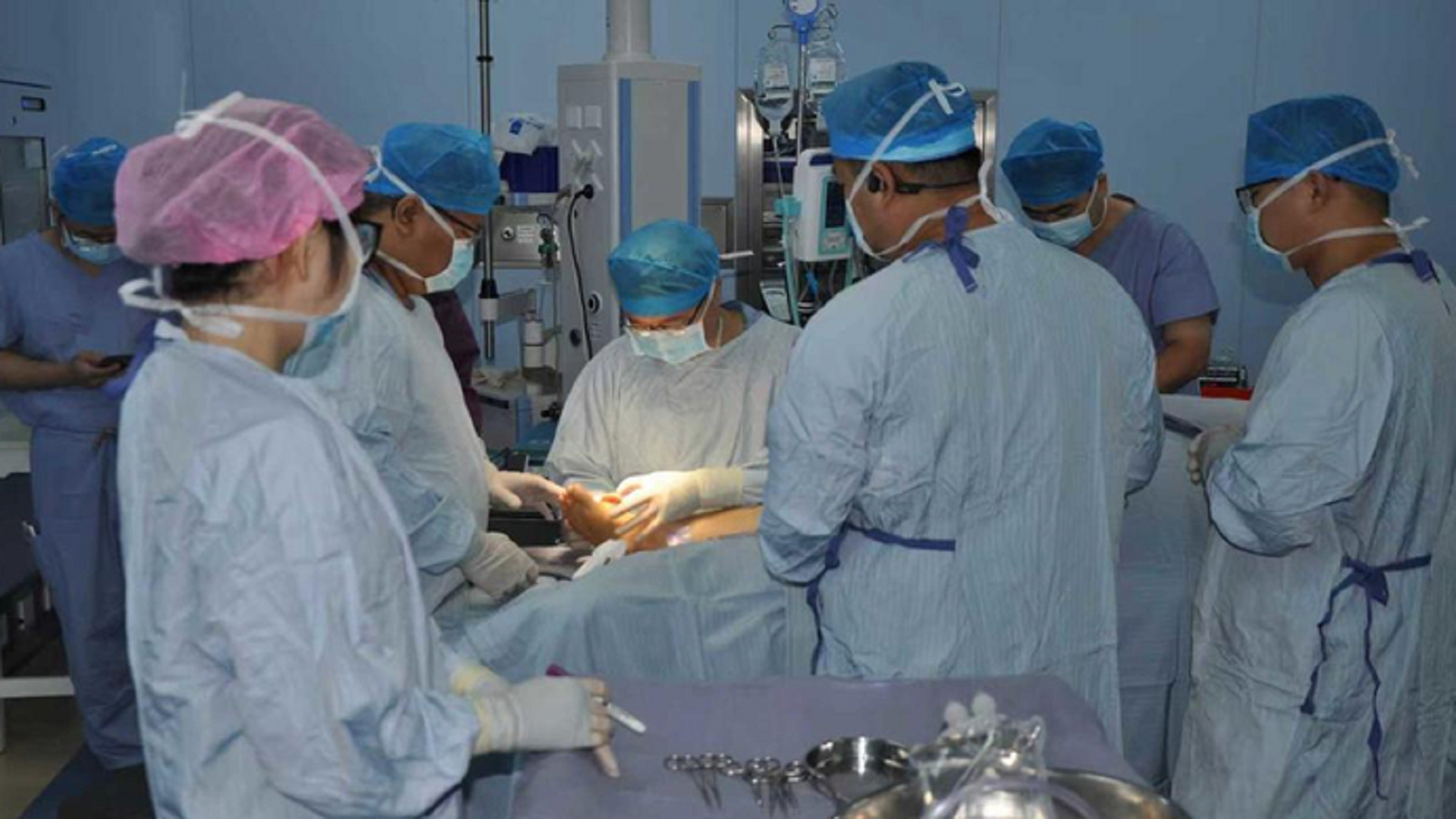
Credit: Shandong Provincial Hospital
The team reportedly chose the foot because its arteries and veins closely match the size and structure of those in the ear. Meanwhile, the thin skin and the soft tissue would require minimal reshaping later.
The initial grafting procedure took around 10 hours. The medics explained that one of the procedure’s biggest technical challenges was reconnecting extremely fine blood vessels which measure between 0.2 and 0.3 millimetres in diameter.
Several days later, the team encountered another complication, as venous reflux, a blood return obstruction, caused the ear to darken, jeopardizing tissue survival. To resolve it, they turned to manual bloodletting (therapeutic phlebotomy), which is the deliberate removal of blood. The process required close to 500 individual interventions over five days to maintain circulation.
Pushing microsurgery limits
While the ear was being preserved on the foot, surgeons worked to reconstruct the patient’s scalp and neck using skin grafts taken from her abdomen. Over the following months, the swelling had subsided, healing progressed, and the blood supply had stabilized.
In October, over five months after the initial accident, the team performed the final stage of the procedure to reattach the ear to its original position. The six-hour surgery was the first documented full reattachment of this kind.
The patient has since been discharged from hospital. Qiu revealed that her facial structure and tissue function have largely recovered. The woman will require a small number of additional procedures, including eyebrow restoration as well as cosmetic scar reduction on the foot.
“We will do our utmost to save lives, no matter how small the chance is,” Qiu said. “The philosophy of perseverance and striving for excellence is a commitment that is integrated into every surgery and every act of health protection.”
link