


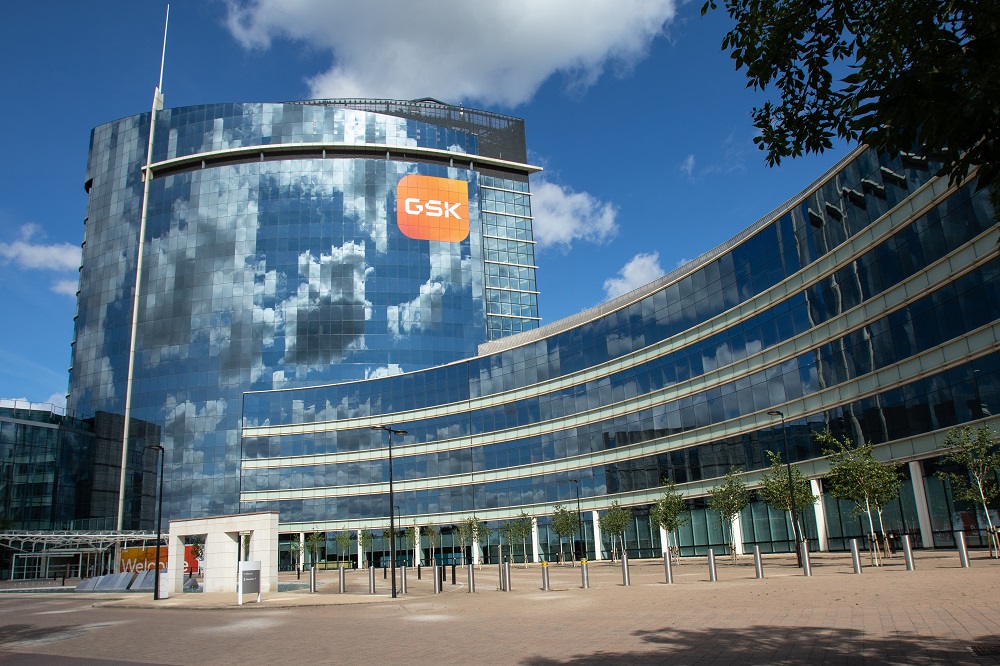
GSK’s presence in immunology and inflammation is heavily oriented around respiratory drugs, but the company has been expanding its scope through business deals. The pharmaceutical giant is now adding food allergy through the $2.2 billion acquisition of Rapt Therapeutics, a biotech whose lead program offers potential dosing and efficacy advantages over a blockbuster product marketed by two of GSK’s big pharma peers.
According to financial terms announced Tuesday, GSK will pay $58 in cash for each share of Rapt, which represents a 65.2% premium to the stock’s closing price on Friday. When South San Francisco-based Rapt went public in 2019, it priced its shares at $12 each.
Rapt drug ozureprubart is a monoclonal antibody designed to inhibit immunoglobulin E (IgE), a type of antibody that the body produces in high amounts in response to an allergen. An anti-IgE-antibody drug is already available to those with food allergies, the every-two-to-four weeks injectable medication omalizumab. This drug was first approved in 2003 for treating moderate-to-severe asthma. The 2024 FDA approval of the antibody for food allergy is the latest in a long line of immunological indications for the blockbuster product, marketed by partners Genentech, a Roche subsidiary, and Novartis under the brand name Xolair. Roche, which records U.S. sales of the drug, reported 2.4 billion Swiss francs (about $3.1 billion) in 2024 Xolair revenue across all of its approved indications.
Rapt’s ozureprubart, formerly known as RPT904, was developed by making targeted changes to the omalizumab sequence, extending its half-life and improving its drug-like properties. This long-acting antibody offers the potential for dosing every 12 weeks for prophylactic protection against food allergens. A Phase 2b test of ozureprubart as a monotherapy is underway with a targeted enrollment of 100 participants age 12 to 55 with a confirmed food allergy. The placebo-controlled study is testing eight- or 12-week dosing; data are expected next year.
In a note sent to investors, Leerink Partners analyst Thomas Smith wrote that the Rapt drug has shown best-in-class potential in IgE-mediated diseases. That includes food allergy, a massive commercial opportunity of about 17 million diagnosed patients in the U.S. that offers plenty of room for new options bringing better efficacy and less frequent dosing, he said. Smith added that the Rapt drug may offer the ability to address patients with elevated baseline IgE levels who are ineligible for Xolair. Leerink sees no indication-specific overlap with GSK’s immunology pipeline, lowering the regulatory risk to closing the acquisition.
“Overall, we believe the RAPT acquisition is a strong strategic fit for GSK, who can leverage their respiratory, immunology, and inflammation (RI&I) expertise, combined with their broad commercial infrastructure, to unlock a potential multi-blockbuster opportunity for ozureprubart in food allergy and other IgE-mediated indications,” Smith wrote. “We believe this deal was likely a competitive process with multiple bidders, but cannot rule out the potential for competing bids moving forward.”
GSK said the Rapt drug builds on its experience and expertise in inflammation and immunology while also aligning with the existing relationships the company has with allergists who prescribe its respiratory drugs. The GSK immunology pipeline has been growing. Last year, GSK paid $1.2 billion to acquire Boston Pharmaceuticals’ efimosfermin, a drug in development to treat the inflammation and fibrosis caused by the fatty liver disease known as MASH. 2025 business deals also brought GSK chronic obstructive pulmonary disease drug candidates from startup Empirico and Hengrui Pharma. In a prepared statement, GSK Chief Scientific Officer Tony Wood said ozureprubart offers best-in-class potential for food allergy.
“Food allergies cause severe health impacts to patients with existing treatment requiring injections as frequently as every two weeks,” he said. “Ozureprubart offers the opportunity to bring sustained protection to patients with dosing every 12 weeks, and is consistent with our approach to acquire assets that address validated targets and where there is clear unmet medical need.”
Rapt licensed ozureprubart from a China-based biotech now known as Shanghai Jeyou Pharmaceutical Co. That 2024 deal gave Rapt a new lead program after the company discontinued zelnecirnon, an experimental treatment for asthma and atopic dermatitis. In early 2024, the FDA placed tests of the oral small molecule under a clinical hold after a report of liver failure.
The ozureprubart deal granted Rapt global rights to the drug, excluding mainland China, Hong Kong, Macau, and Taiwan, where Jeyou retains rights. Rapt paid $35 million up front and could pay an additional $672.5 million in milestone payments, according to the company’s regulatory filings. Jeyou will also receive royalty payments on net sales of ozureprubart if it reaches the market. Per the acquisition agreement, GSK assumes responsibility for these payments. The Rapt pipeline also includes the cancer drug tivumecirnon, an oral small molecule CCR4 antagonist designed to keep immunosuppressive regulatory T cells from migrating into tumors. In regulatory filings, Rapt said it has been seeking a partner to develop this drug.
While the Rapt acquisition values the biotech at about $2.2 billion, GSK estimates its payment, minus the cash Rapt has in its accounts, will be about $1.9 billion. The acquisition agreement requires the majority of Rapt shareholders to tender their shares. GSK expects to complete the transaction in the current quarter.
Photo by GSK
link